Tools
Tommy Geoco
The year of the connected canvas
In this post
Happy Tuesday.
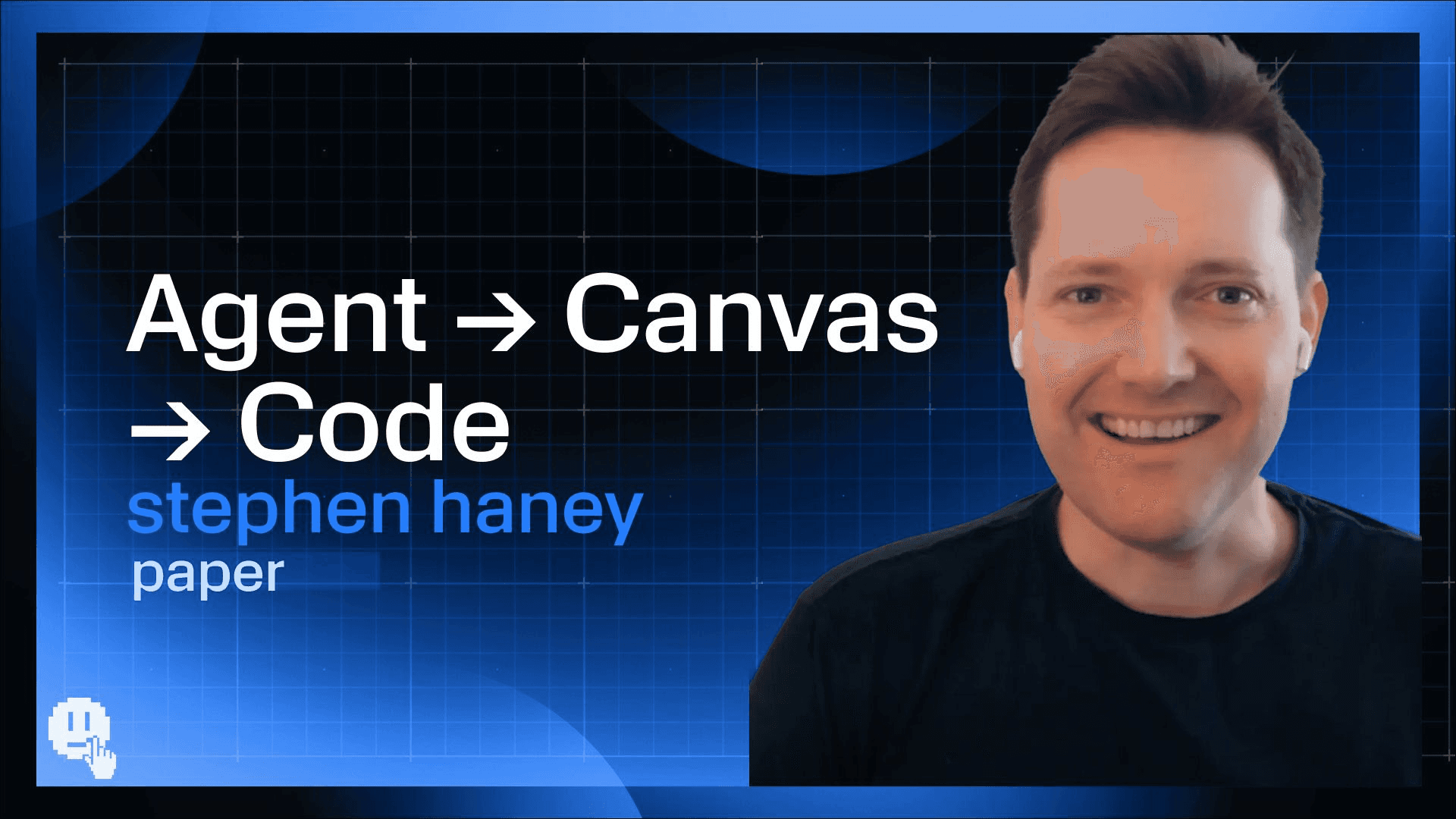
I talked to the founder of Paper, a “connected canvas” design tool. Last year, he predicted this state of design tools. Today, he’s predicting the last 3 software building tools. Watch or listen here.
A few weeks ago Hang Xu and I got into it publicly about AI's role in design. Then we had a three-hour private call, and I wrote about why it stuck with me.
That framing matters for everything below.
– Tommy (@designertom)
TOGETHER WITH PAPER
Paper Desktop: "The Connected Canvas"
Paper just shipped MCP on desktop. Your canvas talks to Claude Code, Cursor, Codex — whatever you're running. It renders HTML/CSS natively, so what the agent writes is what ships. No translation layer.
Stephen Haney joined me on State of Play to break it down. We get into the crazy 8s workflow, why Paper's team canceled Figma, and what it means when your production site becomes your design source of truth.
Three patterns I'm tracking right now
1. The structural gap is widening.
My debate with Hang clarified something. Most designers aren't resistant to AI. They're too employed to explore it. And it’s not a lack of ambition, but time and energy.
For those that aren’t, UC Berkeley researchers confirmed the mechanism in Harvard Business Review: AI doesn't reduce work, it intensifies it. Tina He named it a psychological Jevons Paradox — capacity rises, expectations rise faster, everyone runs harder to stay in place.
And it’s contributing to a new layer of burnout (that I’ve felt, too).
2. The tools just crossed a threshold.
What Stephen described isn't future state. Paper MCP is live today. The canvas is a node in the workflow, not a dead end.
The specific shift: the canvas becomes a prompting surface alongside your terminal. Sketch one direction, agent spins seven variations using your design system, you curate. That's a new crazy 8s use case — the blank canvas problem is history.
The bottleneck moves from production to editorial judgment. I wrote about this compressing loop and what it means. Judgement becomes your primary loop.
3. "AI native" is a temporary distinction
I asked Stephen what AI-native designer even means. His answer: "In a few years, you won't call yourself that. You'll just be a designer."
Marc Prensky coined "digital native" in 2001 and evolved from it himself once the technology became ambient. So it was with the internet, so it will be with AI.
The label dissolves when the tool disappears into the work.
But we're not there yet. I wrote about experiencing fifty to a hundred cognitive cycles a day, each one hitting the nervous system like the first. Which is why I've been running Carmack Weekends: two days obsessive exploration, day three mandatory rest.
The rhythm comes from Cal Newport on Carmack's deep nights.
I have four teenage boys. A seven-month-old daughter. Recovery is what makes the work sustainable.
Quick Hits
Guillermo Rauch / Vercel — All designers at Vercel now also build. The design team made "Leap," an internal agent that generates social card assets — fully self-serve, live preview, built in a handful of prompts. No sprint, no master plan. It just propagated on Slack. "The future of design is engineering."
Figma + Anthropic: Code to Canvas — The bridge now runs in reverse. Build a working UI with Claude Code, pull it back into Figma as an editable design file. The canvas isn't the starting point anymore — it's the refinement layer.
Eno Reyes / Factory — Contrarian take worth reading: "Taste is exactly what you should be automating." Humans have great taste in bursts; AI applies decent taste constantly, at 3am. Stop protecting taste as the last human skill — start encoding it into systems.
Anthropic's own RCT — Developers using AI coding assistance scored 17% lower on post-task knowledge assessments. Productivity gains were not statistically significant. The "looks finished" trap, quantified.
Toolbenders Talent — talent.toolbenders.com is live. AI-native design and product roles. Hiring or looking, start here.
MEET OUR PARTNERS
These are tools I actually use, so I asked them to sponsor the newsletter. They said yes. The best way to support us is to check them out 👇
Framer → How I build websites without code
Mobbin → How I find design patterns fast
MagicPath → How I design in canvas
Contra → How I hire and manage freelancers
Dscout → How I run user research
That's it for today.
Working on a series of agent-drive canvas workflows to test just how solved this blank canvas really is. More on that soon.
If you've shipped anything using an agent + canvas workflow, I want to hear what broke.
See you on Friday.
Tommy