
Tools
Tommy Geoco

Designers and "phantom competency"
In this post
Happy Friday.
I've been having the same conversation on repeat.
Someone asks what it means to be "AI native." I posted what I think that actually means this week. The tl;dr: it's not a job title. It's a shape of work.
Also this one, if you're thinking about what enterprise teams should actually do about it right now based on what I’ve heard from enterprise leaders at Shopify and Ramp.
But this week, lets talk about designers and “phantom competencies”.
– Tommy (@designertom)
TOGETHER WITH MAGICPATH
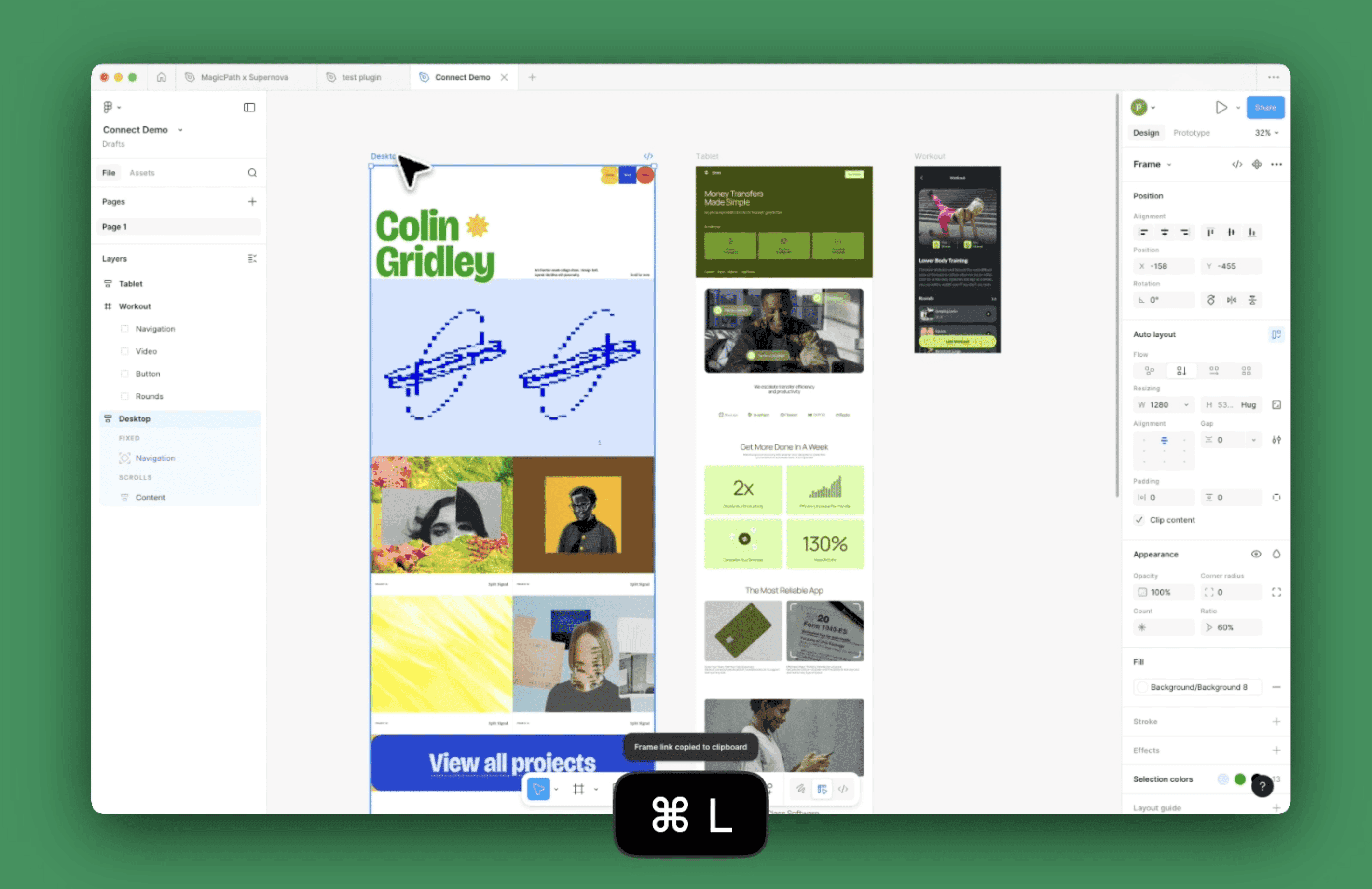
Going from design to code is like finishing a house then asking for blueprints so someone else can rebuild it. “Design handoff” feels like a total detour.
MagicPath is a code-first canvas made for designers.
What you design is what ships. No translation layer, no rebuild.
Design is code. The tools are finally catching up.
The borrowed ceiling becomes the real floor
I've been calling something Phantom Competency.

When you augment with AI, you're shipping beyond your actual skill level. The output looks like someone more capable than you currently are. Most people treat that gap as the destination. They stay at the borrowed ceiling and call it growth.
The people I find interesting treat it as a ratchet.
They stay in the uncomfortable zone long enough that their real skill rises to meet the output. The ceiling becomes the floor. Then they borrow a new one.
This only works if you were already playing. If you're waiting for a business case or a deliverable or permission, you won't stay in that zone long enough for it to matter.
The people pulling ahead were already playing before AI showed up.
I dropped episode 3 of Toolbenders today. Three designers with three completely different approaches. Same pattern of curiosity.
Mansoor, based in Dubai, is treating Arabic, Chinese, and German writing systems as shape libraries.
Yanni built a WebGL hero in roughly an hour using Midjourney, Unicorn Studio, and Framer.
Matt Greenberg vibe-coded a sneaker shopping experience in WebGL using Leva and three.js.
All three of them are building things nobody asked for. That's the pattern. That's what actually makes someone AI native.
Watch Toolbenders Episode 3. It’s worth the 15 minutes.
Quick Hits
a16z / David George — "Incorporate AI natively, not bolt on a chatbot to existing workflows." He said it plainly in February, and the AI-bolted-on framing is doing more work than most think pieces I've read on this topic. There's a whole gap between what companies call AI-native and what it actually looks like.
Paper — Stephen Haney has been posting a live build log documenting dithering and halftone shaders. paper.design/build-log. The retro-futurism wave I was calling in 2024 is fully here. Paper is building the tools for it in public.
Pablo Stanley / Efecto — Pablo said he hasn't used Figma for UI/UX "in a long time." That sentence means different things depending on where you sit. His terminal workflow post from earlier this month is worth reading. Watch what he builds at Efecto.
Unicorn Studio — If you haven't seen what George Hastings is building here, you're missing the WebGL layer that most designers skip. Yanni used it in this week's episode. It shows. unicorn.studio.
MEET OUR PARTNERS
These are tools I actually use, so I asked them to sponsor the newsletter. They said yes. The best way to support us is to check them out 👇
Framer → How I build websites without code
Mobbin → How I find design patterns fast
MagicPath → How I design in canvas
Contra → How I hire and manage freelancers
Dscout → How I run user research
That's it for this week.
I'm deep in an upcoming Labs video and thinking a lot about how to talk about taste in a world where the technical floor keeps dropping.
If you're somewhere in the middle of the AI native question of figuring out where you actually stand, tell me.
I want to know what the friction point is while we’re building our rubric.
See you next week.
Tommy