Tools
Tommy Geoco

Build Interfaces to Understand Systems
In this post
Happy Friday.
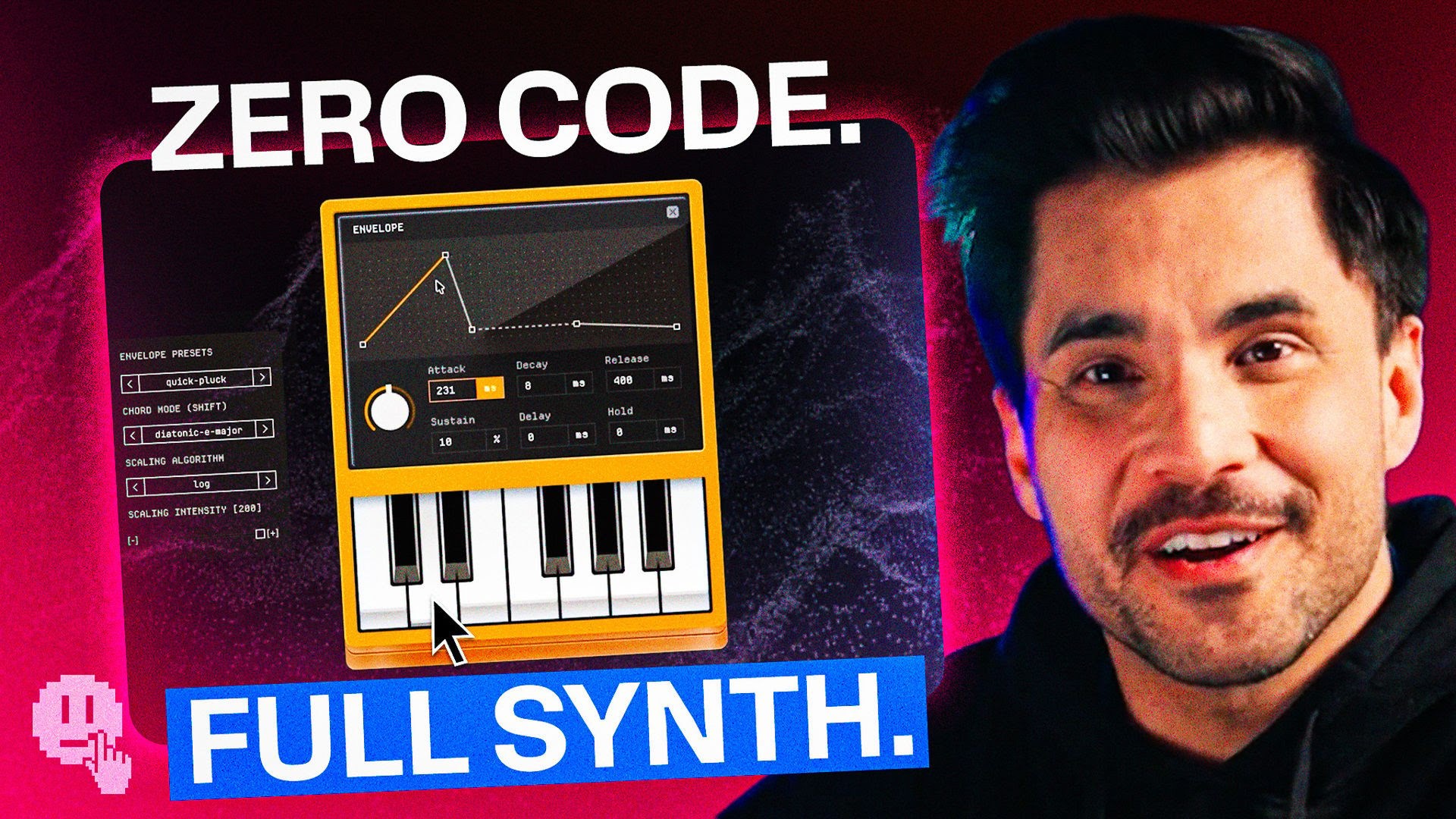
My latest episode of design reactions went live today and I’m still thinking about that digital synth created by Will King.
Three designers shared their work with me and accidentally described the same pattern from three completely different angles.
I decided to share it today, and I think you’ll find this one pretty compelling.
I’ve also been heads-down on our invite-only talent network (new wave of invites goes out today) and the “State of Prototyping” survey, which launches soon.
It's been a week. Let's get into it.
– Tommy (@designertom)
TOGETHER WITH MOBBIN
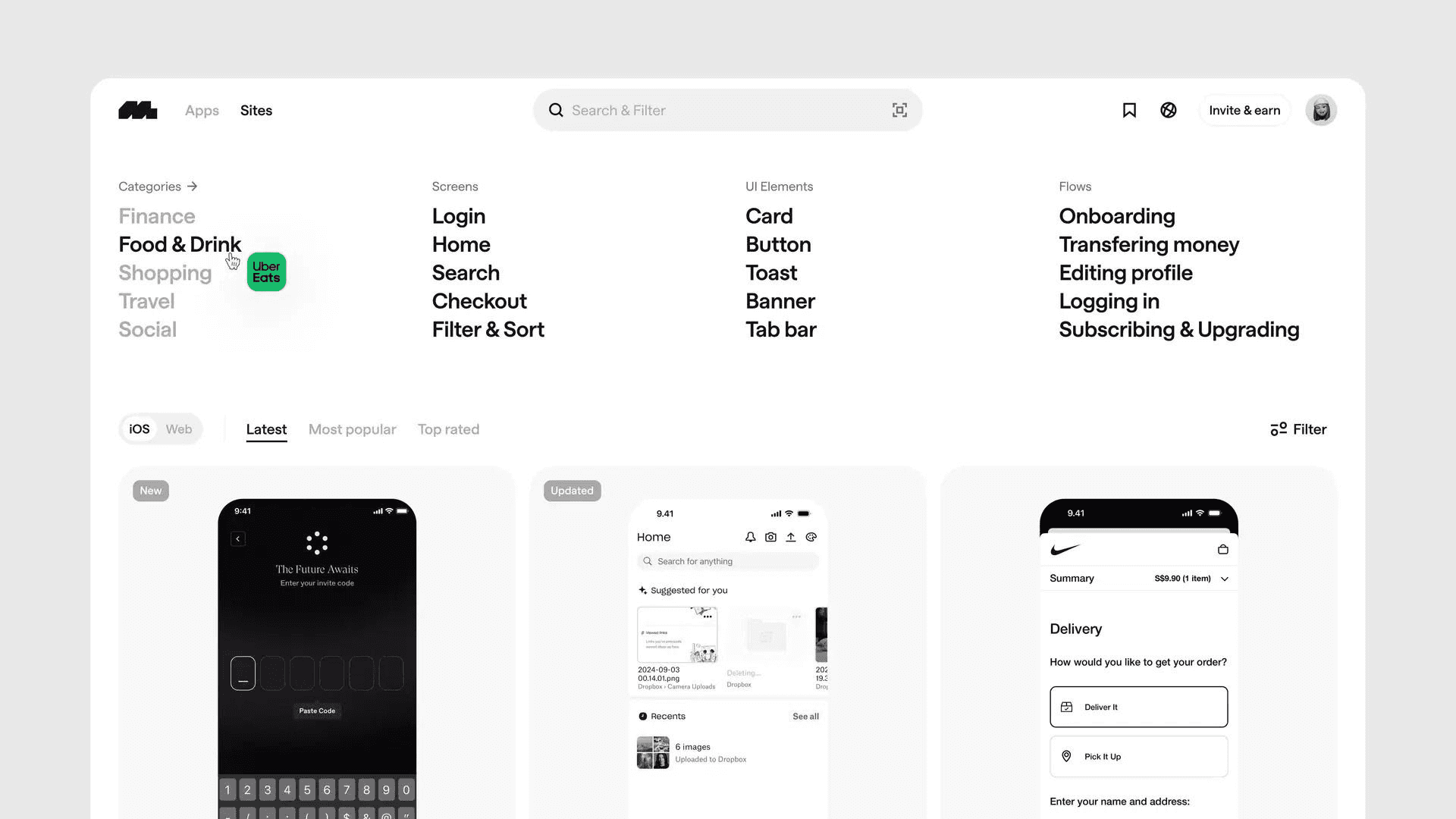
Find design inspiration in minutes.
Mobbin is a massive library of real product screenshots and full flows from top apps. Search by platform, pattern, component, or category to find what actually works in the wild.
Great for audits, pattern studies, and getting your team aligned fast.
Or just for finding that next visual direction, like I did with my product Lorelight.
Abstraction Enjoyer
I've had "abstraction enjoyer" in my bio for a while and people keep asking if it's a joke. It's not. It's my whole thesis.
Every technology reaches mass adoption not by getting better, but by getting further from itself. Each layer of abstraction hides the one below it. Each layer unlocks a new population of users who don't care what's underneath.
Technology | Time to 100M users |
|---|---|
Telephone | 75 years |
Television | 22 years |
Internet | 7 years |
iPhone | 3 years |
ChatGPT | 2 months |
But ChatGPT was just Layer 3.
While it was hitting 100M users, Copilot was already at millions of developers, agent frameworks were launching, and ambient prototypes were circulating in labs.
AI broke the line. All the layers are expanding at the same time. It was a detonation, not a sequence.
I've been circling this idea for weeks, and then three designers shared their work with me and proved it from three different angles. None of them coordinated. None of them even knew each other.
The pattern they described has little to do with AI. It was about building interfaces to understand systems.
The abstraction stack is what makes that possible at every layer simultaneously.
Layers of Abstraction - as of February 2026
Layer 0: The Math.
Transformers. Attention mechanisms. Maybe 10,000 people on earth. If you're reading this newsletter, this isn't you. (It's not me either.)
It doesn’t mean you don’t understand this layer, but it’s probably not your interface or something you’re working on.
Layer 1: The Model API.
Raw calls to GPT-5.3, Opus 4.6, whatever Mistral shipped this week. JSON in, JSON out. No UI. Just pipes.
Layer 2: The Terminal.
Claude Code. Codex. OpenClaw CLI. The model becomes a collaborator with file system access. This is where Will King lives.

Will's a design engineer at Snowflake who saw an analog synthesizer on Instagram and thought: I could build that in the browser.
His line was the best thing I heard all week: "AI is not doing the thinking. It's just doing the typing."
Will didn't ask Cursor to design a synth. He had the vision. Cursor just removed the friction of remembering CSS grid syntax. He also gives Cursor design system rules so the output doesn't "feel like Tailwind anymore."
And Variant just shipped “Vibe Sampling”, a tool for exactly this kind of parametric design control.
Layer 3: The Chat.
ChatGPT. Claude. The new floor of mainstream adoption.
Matt Shumer's advice: pay $20/month and just use the thing. Tiago Forte explaining Cowork vs. Claude Code to his productivity audience is the tell: "easy mode" is just a feature inside an app now.
Layer 4: The Embedded Feature.
Notion AI. Figma Make.
Josh Puckett's Interface Craft exists because this layer is exploding. Danny Limanseta writes about design engineering as a discipline that's eating traditional roles alive.
People at this layer don't even know they're using AI. The model disappears. It becomes a feature, not a product.
Layer 5: The Agent.
Devin. Warp Oz. Team9. Ryan Carson's Antfarm. The model becomes a worker. You describe outcomes, not steps. You leave and come back to a PR.
On February 10, 2026, four agent orchestration platforms launched in a single day. Four. In one day. Don't do the math on where this is going (please).
Layer 6: The Agent-of-Agents.
Mastra's observational memory.
My own Clawdbot setup (yeah, I'm in here too). Maybe 5% people on earth operate here. You don't talk to models. You talk to systems that talk to models.
Taylor Allen has 500 followers and no profile picture. And he operates at this layer naturally. He doesn't just chat with AI, he writes markdown PRD files. Structured documents that act as context for AI agents. Like giving a contractor blueprints.
Cornelius put it perfectly: the context file is "simultaneously the law and the legislature." It describes how to change itself. The system evolves.
Six months ago that workflow would've been a week of back-and-forth with a developer. Taylor did it in an afternoon. I grabbed his open-source code for the Toolbenders landing page the same day. Shipped it before the episode even published. (I know.)
That speed didn't come from Taylor being a “10x designer”. It came from him building interfaces that help him understand what he was making while he was making it.
Layer 7: The Ambient.
Claude Cowork. Apple Intelligence. The model becomes the room. You don't open it. It's just on.
This is the next layer developing rapidly, where we start to see the inventions from Layer 0 going mainstream with enterprise teams and consumers.
We’ll be hearing a lot more about this layer this year.
Quick Hits
Agent Wars is betting real money on live coding battles between AI agents. The competitive layer is here.
OpenClaw is building AI for TradingView taking the CLI-to-product path in real time.
Three.js hit 6M downloads/week. Proof that abstraction unlocks builders, not just users.
Harrison Chase's sandbox patterns are giving agents their own isolated computers. The infra is getting real.
Pete Koomen on the new methodology. When the builder IS the product person. YC is noticing.
Serge's mobile-first landing pages. The product IS the pitch. No funnel. Just interface.
MEET OUR PARTNERS
These are tools I actually use, so I asked them to sponsor the newsletter. They said yes. The best way to support us is to check them out 👇
Framer → How I build websites without code
Mobbin → How I find design patterns fast
MagicPath → How I design in canvas
Contra → How I hire and manage freelancers
Dscout → How I run user research
That's it for today.
"Abstraction enjoyer" isn't a joke bio. It's a worldview. The transformer didn't go mainstream. ChatGPT did. The model API didn't go mainstream. Copilot did. The agent framework didn't go mainstream. We're about to find out what does.
The technology isn't just getting better. It's getting further from itself.
All the layers are moving at once. And the builders winning right now are the ones who pick the right layer for how they actually work, then close the gap themselves.
Go build something this week. Keep the screenshots.
See you next time,
Tommy