Community
Tommy Geoco
Monitor stands have more personality than software
In this post
001. Quick Hits
Happy Tuesday.
I've been talking to designers lately who are making things for the love of the game: three-year build timelines, zero investors, apps that feel nothing like anything else on your phone.
The kind of rebellious discovery I’ve been attempting since I started filming This is Taste, speaking at high schools, and making things for me.
In today’s episode, I talked to Andy Allen of Not Boring Software. If you’re exhausted from the never-ending noise of the industry, this conversation will be chicken soup for your soul.
(And for dessert: “The Keeper” by Soleio whose First of Kind podcast is my new favorite format.)
– Tommy (@designertom)
TOGETHER WITH MOBBIN

If you're still reverse-engineering app flows from static screenshots, there's a better way.
Mobbin is the design reference library built for how we actually work now.
They recently dropped Animations: live video captures of real app interactions, so you can see exactly how an interface moves, not just how it looks.
And if you're designing for AI products, their dedicated AI category has over 1,600 screens from real AI apps — the actual interfaces people are shipping.
Monitor stands have more personality than most software
There are more expressive monitor stands on the market right now than expressive apps on your phone. Stands come in walnut, concrete, bent steel, floating cantilever.
Software comes in light mode and dark mode.
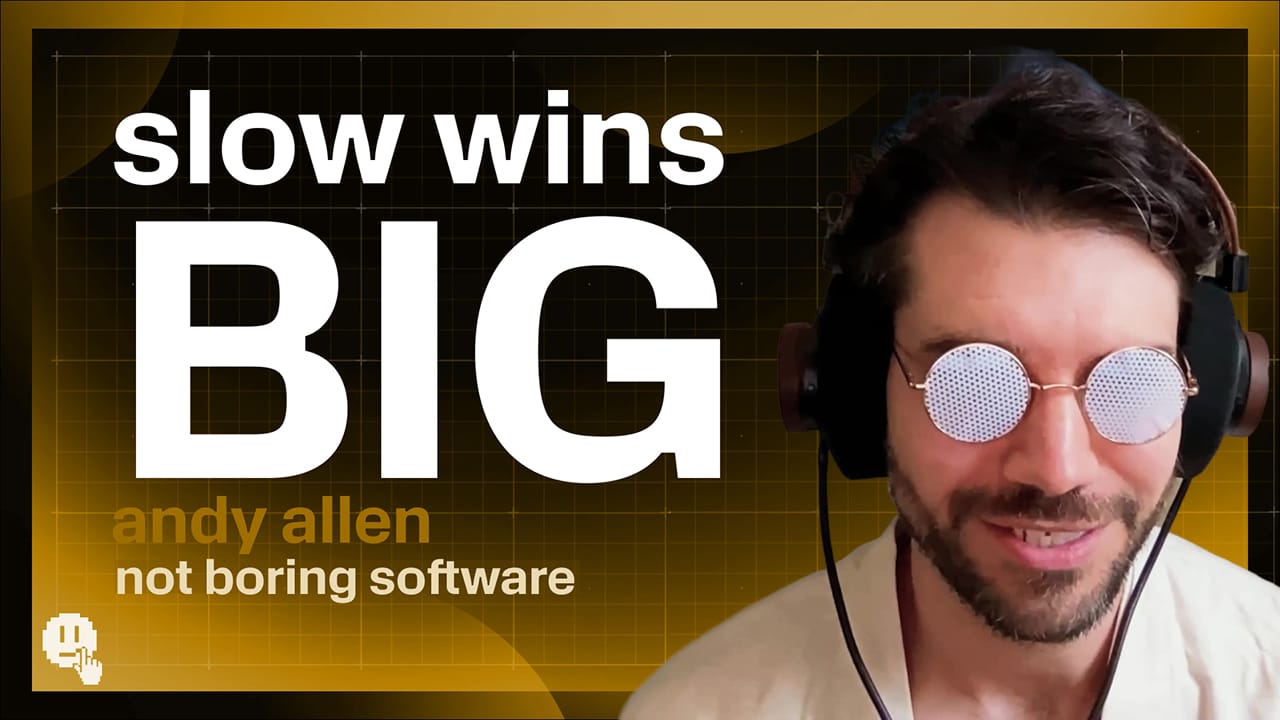
Andy Allen pointed out something in our conversation: in fashion, students grow up admiring McQueen and Abloh. In software design, students admire the iPhones and enterprise tools — the trickle-down products.
The cultural hierarchy is inverted. We have no haute couture. No A24. No indie label scene that young designers can look at and think, I could do that, my way.
Andy had to raise $45 million, build hardware, get a decent exit, and walk away from all of it before he realized that bootstrapping a calculator app was even an option. "I didn't know it was an option" — maybe the saddest sentence in creative work.
This is a visibility problem and an economic one.
Ole Lehmann recently broke down the FT data: new websites, iOS apps, and GitHub commits are all going parabolic. A teenager with Claude can ship what used to take a funded team. And yet — Naval's line holds: there is no demand for average. Execution is now cheap. The premium is taste, point of view, the thing that makes someone stop scrolling.
The cost of execution collapsed, but the returns to conviction went up.
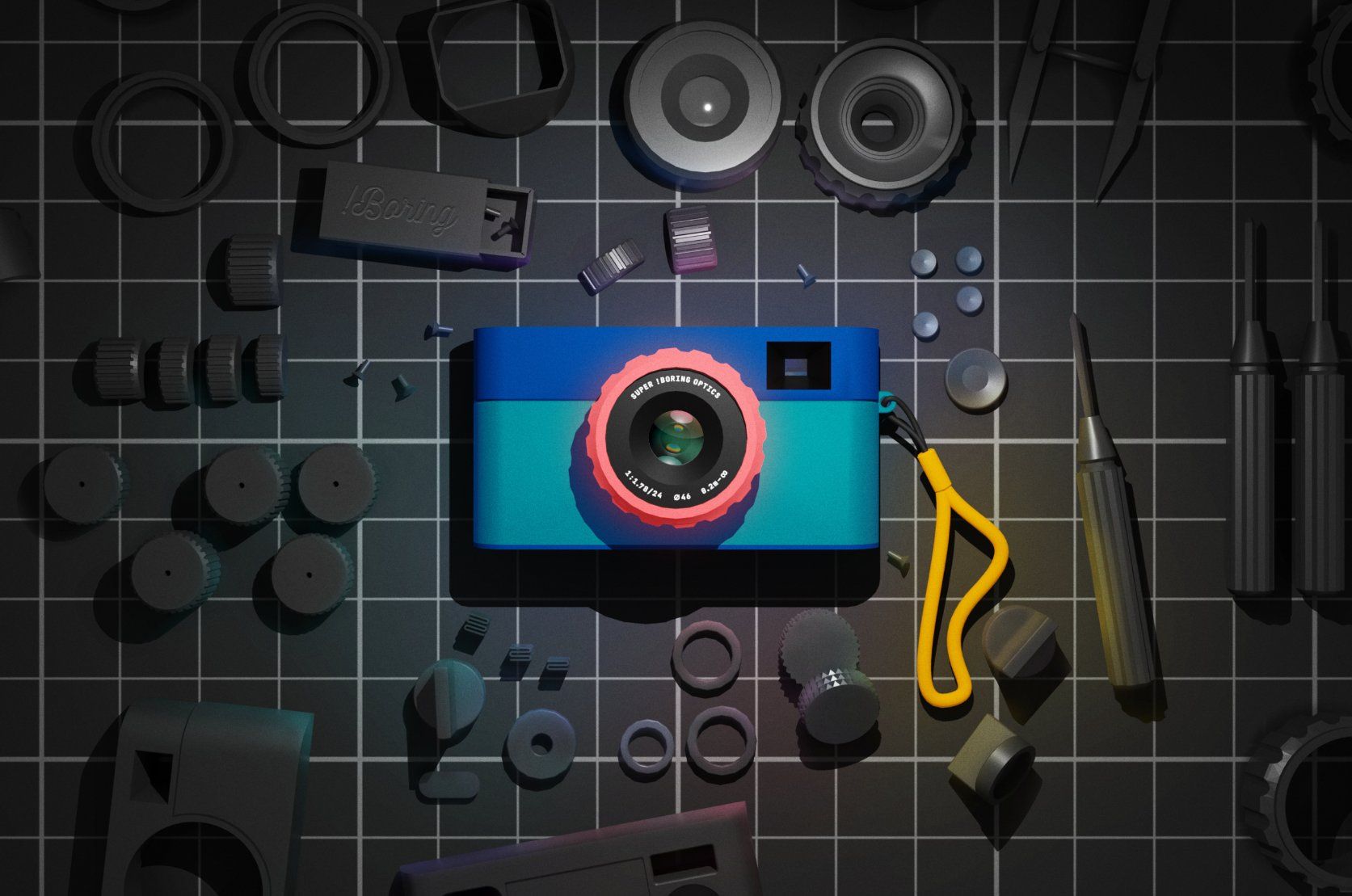
So where does conviction come from? Not from speed. Andy spent three years on the Not Boring Camera. He 3D-printed the interface to feel the ergonomics in his hand. His metaphor for the design philosophy: the kid in the cockpit. You don't know what all the buttons do, but you're not intimidated — you just want to twist the dial and see what happens.
Charles Broskoski at Are.na is running a similar playbook — 15 years of patient growth, subscription-funded, no algorithm. His aspirational comp isn't Facebook. It's a Japanese hot spring hotel founded in 705 AD. "The internet needs more artists building software."
Cam Sackett built Perplexity's Computer landing page solo — Figma, Cursor, Krea, Logic Pro — interactive design, dev, motion, and music by one person. 102K views. 896 bookmarks. People aren't just enjoying craft. They're studying it.
Lochie Axon is obsessing over bringing haptics to the web — custom tactile patterns with variable strengths and durations. Making web apps feel as good as they look. In an era where most people are racing to ship anything at all, this person is fine-tuning vibration curves.
A designer named Will Smith watched one of my videos last weekend and spent a few hours building Helios — a Strava visualizer that maps your runs against your annual goals. No business model. No launch plan. Just an idea that sparked and a person who made the thing.
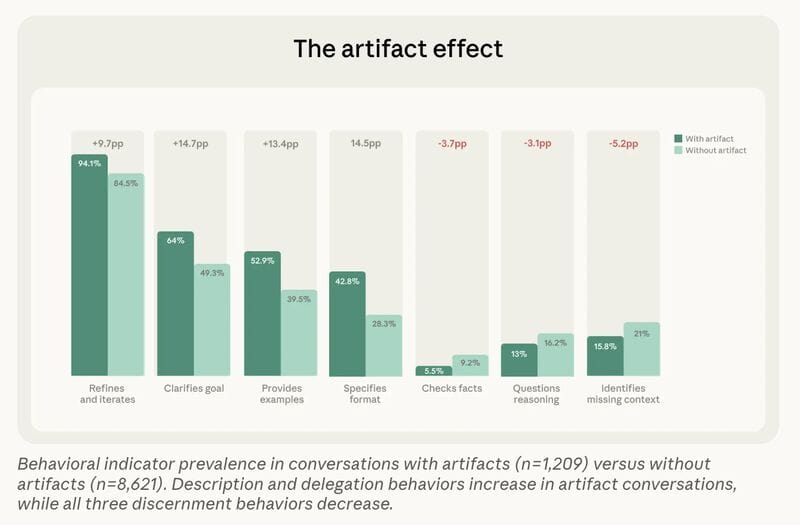
That impulse — the one that makes you open a sketchbook or fire up Figma at 11pm because something clicked — AI can't generate that. The Anthropic education report showed that when AI delivers polished output, people stop questioning it. They stop pushing back. They stop asking "is this good?" Without a cultural framework for what good looks like, polished and exceptional become indistinguishable.
ADIN's research frames it well: AI won't democratize media — it will re-centralize power around the people with the strongest worldview. Content becomes exhaust. Conviction becomes the engine.
We're in the early Bauhaus days of software design. The canon is still being written.
And right now, the people writing it are the ones with their hands in the clay — not managing teams, not optimizing funnels, not chasing the next model release. Just making things that feel like someone made them.
Monitor stands figured this out. (Hopefully) software is next.
Quick Hits
Ridd's Paper moment — 740 bookmarks, 1.5:1 save-to-like ratio. Designers are collecting craft like artifacts. The migration from canvas tools to code-native surfaces is real.
Efecto by Pablo Stanley — A design tool where Claude Code, Cursor, or any CLI agent joins an infinite canvas. The interesting part isn't the AI — it's that someone is still rethinking what a canvas should be.
Guido Rosso's Ferrari UI — A 1:1 replica of Ferrari's central control UI built with Three.js and Rive. No client. No brief. Just "I wanted to see if I could." That's the energy.
Jenny Wen on designer types — Anthropic's design lead (ex-Figma) breaks down who's actually in demand: block-shaped generalists who go 80% deep across domains, long T-shaped specialists at the top 10% of their craft, and curious newcomers. The common thread: human adaptability over pure prompting skill.
Harry Stebbings: 20% layoffs coming — Three founders told him they're planning 20% headcount cuts. The pressure to be average just became existential. The arbitrage for taste gets wider as the middle disappears.
These are tools I actually use, so I asked them to sponsor the newsletter. They said yes. The best way to support us is to check them out 👇
Framer → How I build websites without code
Mobbin → How I find design patterns fast
MagicPath → How I design in canvas
Contra → How I hire and manage freelancers
Dscout → How I run user research
That's it for today.
I keep coming back to Andy's monitor stand observation — that physical desk accessories express more variety than the apps we use eight hours a day.
That bothers Andy. Maybe it bothers you. And the people who are bothered are the ones building the alternatives.
See you soon,
Tommy